
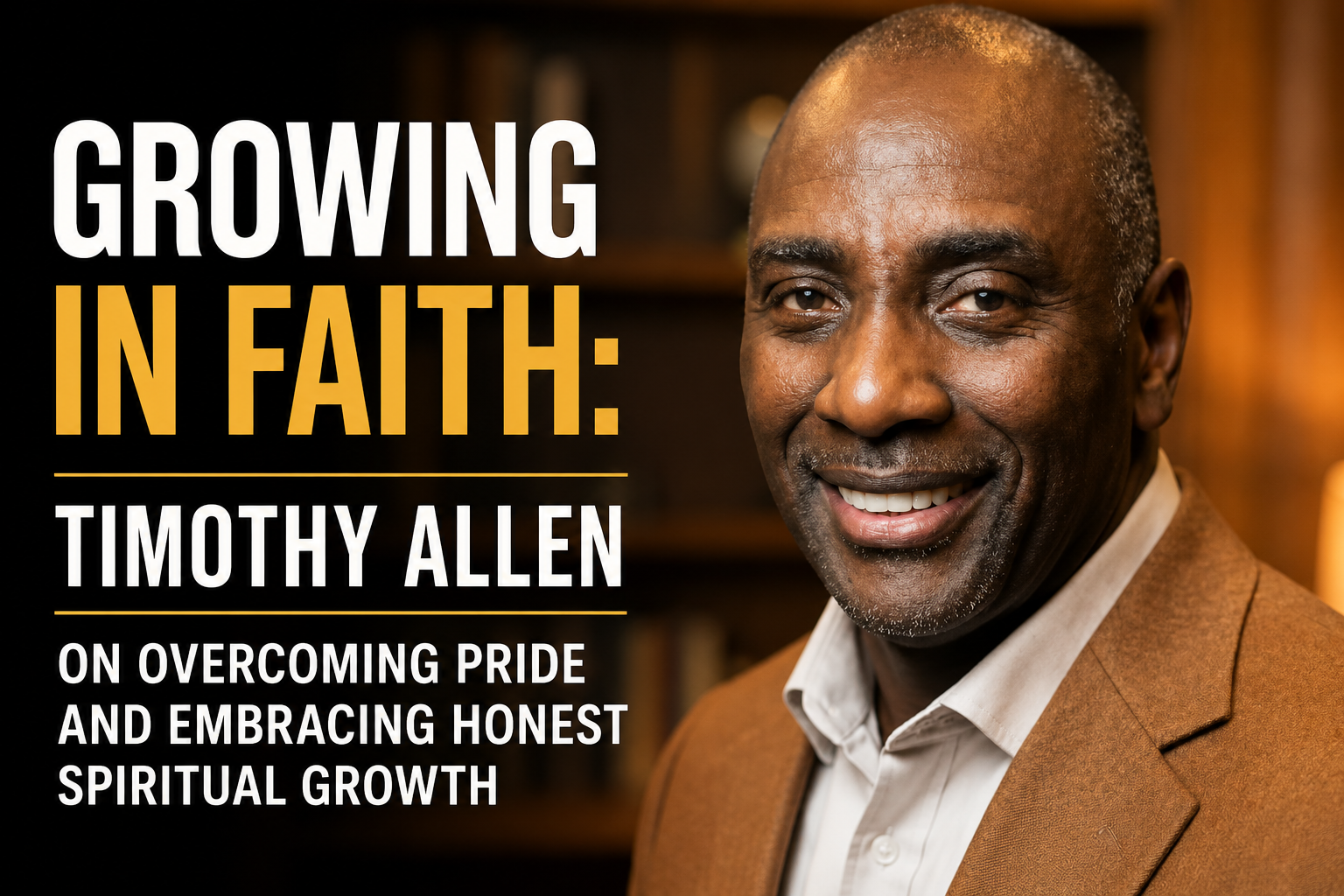
Timothy Allen: From Personal Collapse to Helping Others Become Who God Intended Them to Be
Introduction
Faith is often misunderstood as a guarantee of comfort, success, or protection from hardship. But in this conversation, Timothy Allen shares a deeper perspective, one shaped not only by ministry, but also by personal loss, disappointment, and growing in faith.
Timothy is a teacher, mentor, and creator of Romans 10:9, a platform designed to help people understand scripture in a practical and transformative way.
His mission is simple but powerful: helping people become who God always intended them to be.
A Journey That Started Early: Growing in faith
Timothy began walking with Christ as a teenager and believes that decision shaped the direction of his entire life.
But despite faithfully serving in church, teaching Bible studies, and living what many would consider a committed Christian life, he eventually encountered a season that challenged everything he believed about faith.
After graduating from university, Timothy secured a successful job in the field he wanted and was doing well financially.
At the same time, he remained active in ministry, teaching young incarcerated men and serving in church.
Then unexpectedly, the economy shifted, and out of everyone in the office, Timothy was the only person laid off.
He reflected on that painful season, saying:
“I thought if you walk with God, you are the one that is supposed to be blessed. You are not supposed to go through anything.”
But life unfolded differently.
Unable to find another job, Timothy eventually exhausted his savings and had to move back in with his parents as an adult.
That experience deeply reshaped his understanding of God and suffering.
“Yes, you can walk with God, and yes, you can be faithful, and your life can still be turned upside down.”
Rather than destroying his faith, the experience became the very thing that prepared him to help others.
Understanding Pride in Christianity
One of the major topics Timothy explored was pride within the Christian life.
According to him, pride often begins with comparison.
He explained:
“People compare themselves to other people, and think because what they are doing is not as bad as someone else, that makes them better.”
The problem, he says, is that people are measuring themselves against the wrong standard.
“The standard is God, not other people.”
This creates spiritual blindness, where individuals assume they are spiritually healthy simply because they appear better than others around them.
Why Honesty Matters in Spiritual Growth
Timothy emphasized that overcoming pride begins with honesty.
He explained that many believers create idealized versions of themselves rather than confronting who they truly are.
“You cannot fix something that is broken unless you acknowledge that it is broken.”
For Timothy, spiritual growth is impossible without truthful self-reflection.
Instead of protecting personal image, believers must be willing to honestly confront weaknesses, struggles, and areas that need transformation.
Lessons Learned Through Criticism and Failure
One of the most striking insights Timothy shared came from his experience in ministry leadership.
Surprisingly, he said he learned some of his greatest lessons from people who disliked him.
“I learned that just because someone does not like you, that does not mean the things they are saying about you are not true.”
That realization changed how he handled criticism.
Rather than dismissing difficult feedback, Timothy learned to evaluate all information carefully, regardless of the source.
He added:
“Truth is true, no matter who brings it.”
This perspective helped him become more self-aware, more teachable, and more grounded as a leader.
Growing Spiritually in Practical Ways
When asked how someone can begin growing spiritually, Timothy pointed to two foundational principles: belief and environment.
First, people must believe transformation is actually possible.
He explained:
“Many people do not reach their potential because they have not convinced themselves it is possible to get there.”
If someone does not believe change is possible, they will never fully commit to the effort required for growth.
Secondly, Timothy emphasized the importance of surrounding yourself with people moving in the same direction spiritually.
Using the biblical story of Jesus raising Jairus’ daughter, he explained how Jesus removed negative voices from the room before performing the miracle.
For Timothy, the lesson is clear:
“We have to remove individuals from our lives who contribute things that do not help us become who God wants us to be.”
Building Romans 10:9
Timothy also spoke about the inspiration behind Romans 10:9, his website and app dedicated to helping people understand scripture more deeply.
He explained that many people have told him he has a gift for simplifying difficult spiritual concepts and making them understandable.
That became the foundation for the platform.
His courses include reflective questions, quizzes, and final exams, not to create pressure, but to encourage intentional learning.
He shared:
“When people know a quiz is coming, they pay closer attention to what they are learning.”
The platform combines teaching, reflection, and engagement in a way designed to help people genuinely grow rather than passively consume information.
Elisha’s Recommendation ⭐️⭐️⭐️⭐️⭐️
Based on this conversation, I recommend connecting with Timothy Allen if you are seeking a deeper, more honest, and transformative understanding of faith.
What stands out about Timothy is his ability to combine biblical teaching, practical wisdom, and personal transparency in a way that challenges people to grow beyond surface-level Christianity.
If you are navigating disappointment, spiritual stagnation, identity struggles, or a desire for a deeper relationship with God, his work offers wisdom, clarity, and encouragement.
Final Reflection
One of the most powerful reminders Timothy left with was this:
“Wherever you find yourself in life right now, if it is not where you want to be, it can change.”
He believes transformation is always possible through God, regardless of someone’s past failures, pain, or current circumstances.
And perhaps that message carries even more weight because it comes from someone who has personally lived through seasons where everything appeared to fall apart.
Contact Romans10Nine here
Support the Work
If this article added value or you would like to support my work in creating more features like this, you can do so here